1. Choose Low-Profile Seating with Elevated Legs
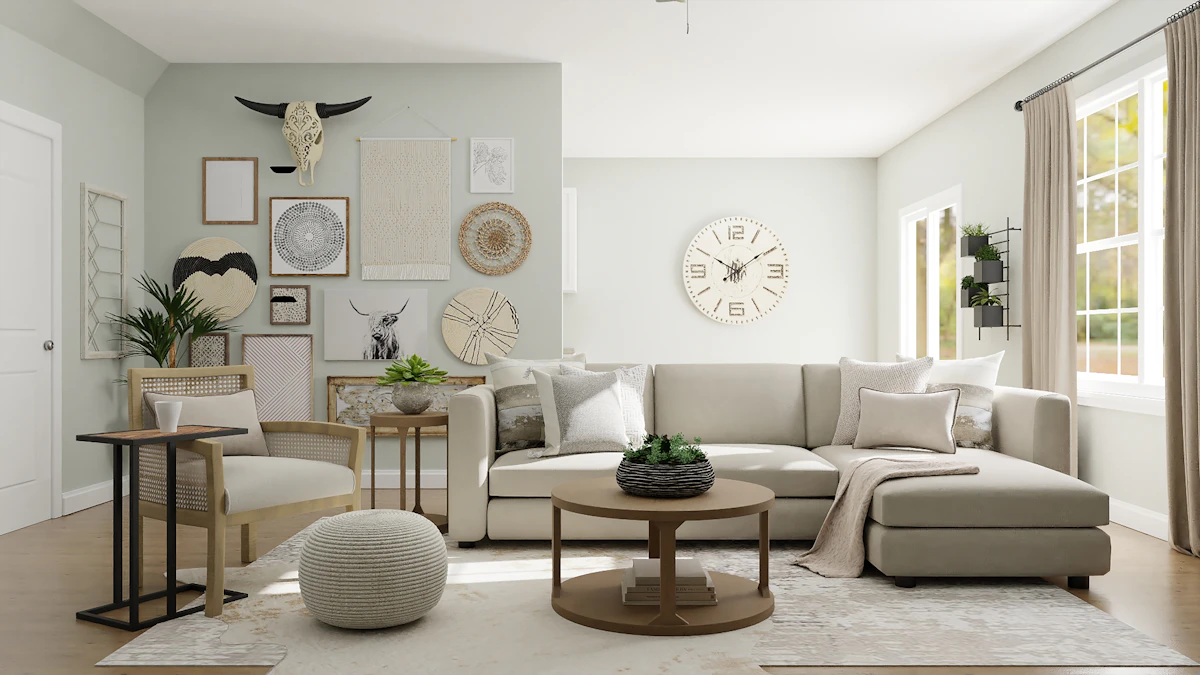
Bulky sofas that sit flush on the carpet block sightlines and make small rooms feel heavy. Sofas and accent chairs with slender, raised wooden or metal legs let light pass underneath, tricking the eye into reading more open floor area.
2. Hang Curtain Rods High and Wide
Mount curtain hardware 2 to 4 inches below the ceiling rather than directly on top of the window trim, and extend the rod 6 to 10 inches wider on each side. When curtains open, the entire window pane stays uncovered while the room gains instant vertical height.
3. Place an Oversized Mirror Opposite a Window
A tall arched or thin-framed wall mirror across from your main window acts like a second window, bouncing daylight deeper into shadowed corners and visually doubling room depth.
4. Stick to a Cohesive Warm Neutral Palette
Painting walls, baseboards, and large furniture in closely related tones—warm ivory, oat, soft greige, and muted sand—eliminates harsh visual borders so the room reads as one continuous space.
5. Anchor the Seating Area with a Larger Rug
Too-small rugs shrink a room visually by breaking the floor into choppy islands. Pick a rug large enough that at least the front legs of your sofa and accent chairs rest on top of it.
6. Layer Three Levels of Warm Lighting
Skip harsh overhead glare and mix a tall floor lamp in the corner, a ceramic table lamp on a console, and plug-in brass wall sconces. Layered 2700K warm light creates cozy designer depth after sunset.
7. Swap Heavy Coffee Tables for Storage Ottomans
A round upholstered storage ottoman gives you a soft footrest, extra party seating, a tray surface for mugs, and hidden space inside for throws and remotes—all in one footprint.
8. Use Vertical Wall Space with Floating Shelves
Install slim oak or matte white floating shelves above desks or sofas to hold books, framed prints, and trailing greenery without sacrificing walking space.
9. Add Glass or Acrylic Side Tables
Tempered glass or clear acrylic end tables give you practical drink surfaces while remaining visually weightless so your eye flows straight across the room.
10. Style Budget Sofas with Tactile Natural Fabrics
Swap basic poly cushion covers for washed linen, cotton slub, or textured bouclé pillows alongside a chunky woven throw blanket. Tactile contrast makes affordable pieces look custom.
11. Float the Sofa a Few Inches Off the Wall
Counterintuitively, pulling your sofa 3 to 4 inches away from the wall (or floating it facing a focal point in an open studio) stops the room from feeling boxed in and creates natural circulation.
12. Choose Round Tables Over Sharp Corners
A round bistro or pedestal coffee table improves traffic flow around tight walkways and prevents awkward hip bumps in compact apartments.
13. Use One Large Artwork Instead of Cluttered Mini Frames
Hanging a single large-scale print or canvas over the sofa calms visual noise and makes the wall look tailored and intentional.
14. Hide Cords and Router Clutter Cleanly
Tuck power strips inside a woven cable box behind the media unit and clip loose TV wires behind furniture legs so the eye never gets distracted by tangled cables.
15. Edit Surfaces Using the Rule of Three
On coffee tables and consoles, group decor in odd numbers—such as a candle, stacked hardcover book, and small ceramic vase—leaving open breathing room around each tray.